 ≡
≡The Mystery of the Sphinx
Origin of the Sphinx
The Great Sphinx of Giza, located near the pyramids of Khufu, Khafre, and Menkaure, is one of the oldest and most iconic sculptures in Egypt.
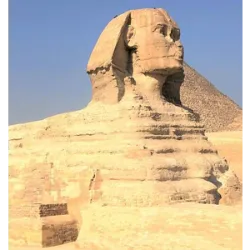
It is believed to have been built during the reign of Pharaoh Khafre (c. 2500 B.C.).
It has the body of a lion and the head of a human, possibly representing the pharaoh himself or a protective deity.
Original purpose
The purpose of the Sphinx is still debated among historians, but the main theories include:
Spiritual guardian of the pyramids: Protected the pharaohs’ funerary complex, symbolizing strength and vigilance.
Representation of power and divinity: The human-lion mix symbolized the pharaoh’s wisdom and strength.
Connection to sun worship: The Sphinx was aligned with the sunrise during certain times of the year, suggesting religious solar connections.
The Sphinx is carved from a single block of limestone, about 73 meters long and 20 meters high.
Its face has human features, but erosion over thousands of years has sparked debates about whom it exactly represents.
Did you know?