 ≡
≡Metal Age (Prehistory)
What was it?
The Metal Age was the last phase of Prehistory, when humans learned to extract and work with metals to make tools, weapons, and utensils.
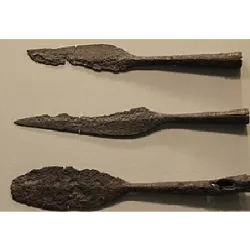
This period took place after the Neolithic and before the emergence of writing in many regions.
When did it happen?
Approximately between 5000 BC and 3000 BC (the dates vary depending on the region).
Main metals used:
🟤 Copper – the first metal used; it was easy to shape.
🟡 Bronze – an alloy of copper and tin; stronger and more durable.
⚫ Iron – very strong and durable; it revolutionized the production of tools and weapons.
Characteristics:
Development of metallurgy (metal extraction and smelting).
Production of stronger tools.
Manufacture of more effective weapons.
Growth of agriculture with better farming tools.
Expansion of trade between peoples.
Development of craftsmanship.
Growth of the population and villages.
Impacts on agriculture:
Stronger plows.
Metal hoes and sickles.
Higher food production.
Expansion of cultivated land.
Organization of society:
Villages grew larger.
Leaders and warriors emerged.
Social differences increased.
Trade became more intense.
Consequences:
✅ Positive:
More efficient tools.
Greater agricultural production.
Growth of trade.
Technological development.
Formation of more complex societies.
❌ Negative:
More frequent wars due to metal weapons.
Increased social inequality.
Conflicts over mineral resources and land.