 ≡
≡
quiz
PrehistoryProve your knowledge in the Arena
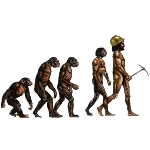
The evolution of the human species began in East Africa approximately 4.2 million years ago with Australopithecus anamensis. This process, known as hominization, spanned millennia and led to the emergence of Homo sapiens, Modern Man. During this journey, there were advancements in toolmaking, firebending, and skill acquisition. Homo habilis began creating simple stone tools, evolving into hand axes under Homo erectus. Homo sapiens sapiens refined tool-making, using materials such as ivory, bone, and wood to create advanced tools. These tools played crucial roles in hunting, treating fur, and making clothing, as well as being useful for fishing and hunting large game.

Homo erectus, by observing fire in nature, learned to produce it, either by rubbing wood or hitting stones. This represented a mastery of nature, allowing early communities to keep warm, develop language, cook food, and more. These physical and linguistic changes facilitated cooperation and planning in groups. This period, which goes from the first hominids to the discovery of writing, is called Prehistory, a time documented by material remains, such as tools, bones and artifacts, due to the lack of written documents.















Discover some interesting facts about Prehistory
The Paleolithic Period

Early humans depended on nature to survive, hunting, fishing and gathering food such as roots, seeds, fruits and eggs. This characterized a collecting lifestyle. When resources were scarce in an area, communities moved in search of food, practicing nomadism. This period, in which chipped stone tools were manufactured and gathering and nomadism prevailed, is called the Paleolithic by archaeologists.
Art and Beliefs in the Paleolithic Era
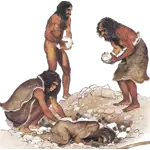
In the Paleolithic, our ancestors practiced magical rituals to influence natural events such as death and storms, due to their dependence on natural conditions to survive. They valued the afterlife and performed funerary rituals, burying the dead in caves or graves in the fetal position, surrounded by stones and accompanied by personal objects, weapons and food. Paleolithic art, represented by paintings of wounded animals in caves, had a magical meaning to facilitate hunting. In addition, exaggerated female figurines called Venus highlighted the importance of motherhood and fertility.
Types of Paleolithic Art
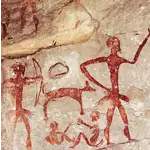
Paleolithic art can be divided into two distinct types: Rock Art, which was performed on the surface of rocks, in outdoor locations or on the walls and ceilings of caves. It usually depicted hunting scenes, animals, and occasionally human hands and figures. Some of the main centers of rock art are in the Franco-Cantabrian region, such as Lascaux and Altamira, in addition to the Spanish Levante and the Côa Valley, in Portugal. On the other hand, Mobile Art included small sculptures, such as the famous female figures Venus, as well as objects of adornment, such as bracelets, rings, and bas-reliefs made in stone, bone or ivory, which were easily transportable.
From the Fertile Crescent to Agriculture
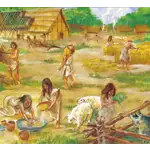
Between 10,000 and 8,000 BC, climate changes led to the growth of grassy plants, such as wheat and barley, near rivers. Humans realized that they could grow these plants and started to practice agriculture. At the same time, they built fences for animals and began to domesticate dogs, sheep and goats. This led to a productive lifestyle, producing food and other goods.
The practice of agriculture made people settle in fertile areas, leading to sedentarization. These landmark changes in human life are known as the Neolithic Revolution and began in the Fertile Crescent regions. This period in Prehistory is called the Neolithic, characterized by agriculture, animal domestication, sedentarization and the use of more advanced polished stone tools.
The Neolithic Revolution
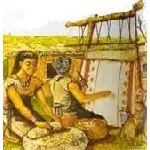
The transition to agriculture and pastoralism in the Neolithic period resulted in the development of new tools and techniques, such as polished stone tools and milling and weaving techniques. This led to a significant change in lifestyles, with communities moving from nomadic in the Paleolithic to sedentary in the Neolithic. Sedentarization has led to the construction of villages close to vital resources such as water and fertile land. Today, some societies still depend on hunting, fishing and gathering natural foods.
HOME