 ≡
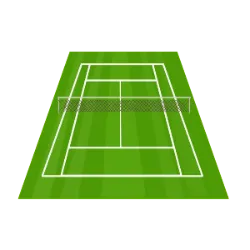
≡The tennis court is not symmetrical.
Despite looking identical, the two sides of the court almost never play the same way, especially on outdoor courts.
Sun
At certain times of the day, one side faces the sun, making it harder to:
return serves
handle high balls
read the ball’s trajectory
👉 Advantage: smart players choose to serve with the sun at their back on key points.
Wind
The wind rarely blows evenly:
on one side it speeds the ball up
on the other, it slows it down
This affects depth, control, and even the serve.
👉 Advantage: play safer against the wind and be more aggressive when playing with it.
Court slope
Courts have a slight, almost invisible slope for drainage.
The bounce may:
skid more on one side
die on the other
👉 Advantage: notice where the ball escapes or loses pace after the bounce.
Why does the game change sides?
Sides change after an odd number of games because conditions are not equal.
Ignoring this leads to avoidable mistakes.
👉 Advantage: use the early games to read the court before crucial points.
Golden rule
- Adjust shot power and height
- Notice where you miss less
- Never treat both sides as equal
💡 Summary: don’t play against the court — play with it.