 ≡
≡
quiz
Portuguese EN 9th gradeProve your knowledge in the Arena

Recording and Processing Information
After listening to or reading something, it is important to organize the information.
Key Ideas
These are the most important pieces of information in the text.
They usually answer questions such as:
Quem?
O quê?
Como?
Porquê?
Notes
They consist of short written points, using:
keywords
diagrams / outlines
lists
Synthesis
A synthesis is a summary of the main ideas, written in your own words and in a clear way.

Compreensão Oral
Ability to listen to and interpret spoken messages (ex.: notícia, entrevista, explicação ou diálogo).
Tema e Assunto
Tema: general idea of the text.
Assunto: specific part of the theme.
Informação Essencial / Acessória
Essencial: necessary for understanding.
Acessória: details or examples.
Tópicos
Main ideas organized in sequence.
Intenção Comunicativa
Speaker's objective: to inform, explain, convince, warn, or criticize.
Objetivo / Subjetivo
Objetivo: verifiable facts.
Subjetivo: opinions or feelings.
Sentido Literal / Figurado
Literal: direct meaning.
Figurado: symbolic meaning. Inferências
Conclusions drawn from clues in the text, even when not directly stated.














Discover some interesting facts about Portuguese EN 9th grade
Text Types and Genres
Biography and Autobiography
Biography: the story of a person’s life written by someone else.
Autobiography: the story written by the person themselves.
Diary
A personal record of daily events, feelings, or reflections.
Memoirs
Accounts of important past experiences in someone’s life.
Report
A journalistic text that investigates and presents a topic with details and testimonies.
Advertising Text
Its objective is to persuade the public to buy a product or support an idea.
Cover Letter
A formal text used to introduce a person and their skills, usually for a job or application.
Writing Review

Imagine that writing is like baking a cake. First, you mix the ingredients (your ideas). Then, you put it in the oven (write the text). But before serving, you need to taste and adjust — this is revision.
During revision, you check several things:
Make sure spelling and accents are correct so no one gets confused;
Check if punctuation helps the sentence “breathe” and make sense;
Ensure verbs and nouns agree correctly;
See if the ideas are clear and easy to understand;
Organize paragraphs so the story flows.
Revision also helps to:
Eliminate unnecessary repetitions;
Improve vocabulary, using more precise words;
Make sure the text answers the assigned topic.
And remember to respect intellectual honesty: writing is like creating something of your own, so:
Use your own words;
Cite sources when needed;
Avoid plagiarism.
Oral Communication

Comunicação Oral
Ability to speak clearly, in an organized and appropriate manner.
Diálogo Argumentativo
Conversation where participants defend ideas using arguments.
Debate
Organized discussion on a topic with different opinions and arguments.
Exposição Oral
Presentation to explain or inform about a topic.
Estrutura:
Introdução (presents the topic)
Desenvolvimento (explains ideas)
Conclusão (final summary)
Recursos Não Verbais
Elements that accompany speech and reinforce the message: gestures
facial expressions
posture
eye contact
tone of voice voice
Cortesia na Comunicação
respecting turn to speak
listening attentively
using polite language
responding clearly
Reading - Text Interpretation

Text Interpretation
Interpreting a text means deeply understanding its content and intention.
Theme and Main Ideas
Theme: the general subject of the text.
Main ideas: essential information that develops the theme.
Fact and Opinion
Fact: verifiable information.
Opinion: a point of view or personal judgment.
Points of View
It is the perspective of the writer, who may agree, criticize, or analyze a topic.
Persuasive Elements
Resources used to convince the reader, such as:
arguments
examples
data
comparisons
Global Meaning of the Text
It is the general message that the text conveys.
Text Structure
The organization of a text usually includes:
introduction
development
conclusion
Written Production
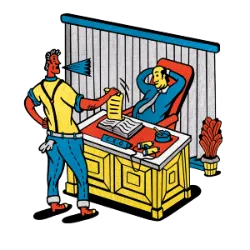
Interview
An interview is a text based on a conversation between an interviewer and an interviewee, with questions and answers.
Objectives:
obtain information;
learn about opinions or experiences.
Common structure:
presentation of the interviewee;
questions and answers;
conclusion or summary of the conversation.
Summary
A summary presents the main ideas of a text in a reduced form.
Characteristics:
short and objective text;
use of your own words;
inclusion of only essential information.
The goal is to convey the main content of the original text.
Synthesis
A synthesis consists of gathering and organizing the main ideas from one or more texts and presenting them clearly.
Difference from a summary:
a summary reduces one text;
a synthesis integrates and relates several pieces of information.
A synthesis requires deep understanding of the topic and the ability to organize ideas.
HOME