 ≡
≡
quiz
Bonaire TourismProve your knowledge in the Arena
Bonaire Marine National Park (BNMP) is one of the oldest marine reserves, established in 1979, covering the waters around Bonaire and Klein Bonaire. Spanning 2,700 hectares, it includes coral reefs, sea grasslands and mangroves, as well as the Lac Bay Lagoon. In 1999, it was granted national park status in the Netherlands Antilles, and in 2001, Klein Bonaire was added as a nature reserve. Currently, restrictions due to Stony Coral Tissue Loss Disease affect dive sites, with sanitation practices recommended. The park covers important areas of wetlands and stands out for its reef ecosystem.

The Cadushy Distillery, located on Bonaire, is a unique attraction, housing the Cadushy Experience. At 1,500 square meters, it is the only distillery in Rincon, offering an educational tour on the production of its exclusive liquors, including Cadushy Cactus Liqueur and award-winning Rincon Rum. The experience includes tasting Dutch Caribbean products, emphasizing authenticity, artisanal production and sustainability. With approximately 25,000 annual visitors, Cadushy Distillery invites visitors to explore the true spirit of Bonaire through its passion, exclusive products and one-of-a-kind souvenirs.

Discover some interesting facts about Bonaire Tourism
Klein Bonaire is an uninhabited islet off the west coast of Bonaire, Caribbean
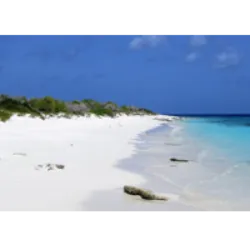
Klein Bonaire is an uninhabited islet off the west coast of Bonaire, Caribbean, forming part of the Dutch Special Municipality. With 6 km², it is flat, with historical ruins and no infrastructure. Sold in 1868, it remained private until 1999. Saved by local efforts and international funding, it is now part of the Bonaire National Marine Park. A habitat for turtles and an important area for birds, it stands out for diving in its coral reef.
Lac Bay, on the island of Bonaire
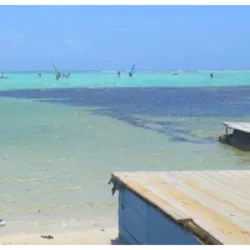
Lac Bay, on the island of Bonaire, is a shallow bay with mangroves and a small fishing port. Internationally recognized as a Ramsar site, BirdLife has identified it as an Important Bird Area due to threatened species. The bay is also home to herons and serves as a nighttime roost for frigatebirds, as well as being a habitat for migratory waders.
The Salt Pier on Bonaire
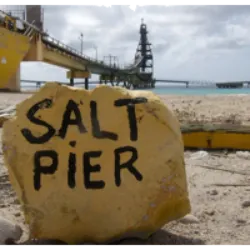
The Salt Pier on Bonaire is a popular spot for divers and underwater photographers, known for its easy entry and accessibility. The pier pillars transform into living works of art, offering a rich variety of marine life, including large schools of fish. The place is ideal for spotting eels, seahorses and turtles, making it suitable for day and night diving. Photographers find exceptional opportunities to capture macro and wide-angle images. However, diving is only permitted if there are no boats at the pier, and permission must be obtained from the local guardhouse.
Bari Reef, near Kralendijk
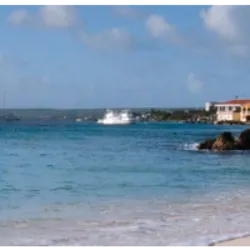
Bari Reef, near Kralendijk, is a popular diving site known for its rich biodiversity. Under the small pier in the northern part, different schools of fish and species such as octopus, barracuda and tarpon can be observed. The peculiar yellow-headed jawfish, which carries its eggs in its mouth, is also an attraction. According to REEF, Bari Reef has the greatest variety of species in the Caribbean. The premises belong to Sand Dollar Resort and Den Laman Oceanfront Apartments. Attention should be paid to the presence of sailing boats near the pier.
The Pekelmeer Flamingo Sanctuary
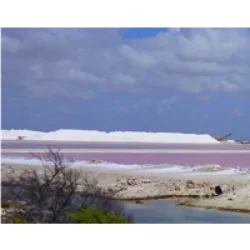
The Pekelmeer Flamingo Sanctuary is one of four global regions where flamingos breed. Located on the southern tip of the island, the sanctuary is home to more than ten thousand Caribbean flamingos. The pink color of the pools contrasts with the white salt flats, due to the presence of small pink brine shrimp in the water. Tourists do not have direct access to the sanctuary, but they can observe the flamingos with binoculars from the road or near Praia Rosa. The intense color of Bonaire flamingos is the result of their diet rich in red carotenes from microorganisms present in salt water. The place also attracts several other species of birds, such as ospreys, cormorants, herons and frigate birds.
HOME