betspot.zone logo
🧠 Educational content • Interactive quizzes

Contemporary Age: Stanislav Petrov

Stanislav Petrov

Who was Stanislav Petrov?

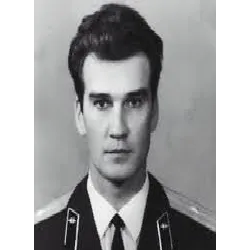
Stanislav Yevgrafovich Petrov was an officer in the Soviet Air Force, born in 1939 in the former Soviet Union. He was neither a politician nor a high-ranking military leader. He was an engineer trained to analyze nuclear early-warning systems, an ordinary man within an extremely dangerous Cold War machine.

What was his real position?

Petrov was not a general. In 1983, he held the rank of lieutenant colonel and was on duty at a satellite monitoring center. His role was to interpret data and report possible nuclear attacks, not to make global strategic decisions.

Why do people say he saved the world?

In the early hours of September 26, 1983, the Soviet system indicated that U.S. nuclear missiles were on their way. Instead of automatically following protocol, Petrov questioned the alert and classified the event as a system error. This decision prevented a possible nuclear retaliation and, consequently, a global war.

Was he a hero?

Technically, yes — but officially, no. Petrov prevented a catastrophe but was not recognized, since acknowledging his correctness would have meant exposing serious flaws in the Soviet defense system.

What happened to him afterward?

After leaving the military, Petrov lived anonymously, facing difficulties and without public recognition.

Did you know?


---publicity---
---article---


Those who liked Stanislav Petrov, also liked to explore

Explore more about Greece is located on the Balkan Peninsula and is washed by the Mediterranean Sea. Its civilization emerged from the 8th century BC, having its roots in mainland Greece, the islands of the Aegean Sea and the coasts of Asia Minor. It later expanded to the shores of the Mediterranean Sea, establishing colonies that contributed to economic and cultural links...

Greece is located on the Balkan Peninsula and is washed by the Mediterranean Sea. Its civilization emerged from the 8th century BC, having its roots in mainland Greece, the islands of the Aegean Sea and the coasts of Asia Minor. It later expanded to the shores of the Mediterranean Sea, establishing colonies that contributed to economic and cultural links...know more


The Fall of the Roman Empire i - About

Explore more about The Fall of the Roman Empire in 476 AD is one of the most significant milestones in history, representing the end of Antiquity and the beginning of the Middle Ages. The Empire, which once controlled vast areas of Europe, North Africa and Western Asia, declined due to a combination of factors that weakened its structure. 
Internally, the empire faced political instability, with frequent changes of emperors and widespread administrative corruption. Government inefficiency and growing social inequality also contributed to its collapse. In addition, difficulties in maintaining the borders and military pressure further weakened the Roman structure. Externally, barbarian invaders such as the Visigoths, Vandals and Ostrogoths repeatedly attacked the Roman borders. The sack of Rome by Alaric in 410 AD and the invasion of the Vandals in 455 AD were decisive events, culminating in the deposition of the last Roman emperor, Romulus Augustulus, by Odoacer in 476 AD.
After its fall, the Western Roman Empire was fragmented, giving rise to barbarian kingdoms such as the Franks and Visigoths. Although the period has been called the Dark Ages, it was also an era of important transformations. With its capital in Constantinople, it survived until 1453, profoundly changing the politics and social organization of the Western world...

The Fall of the Roman Empire in 476 AD is one of the most significant milestones in history, representing the end of Antiquity and the beginning of the Middle Ages. The Empire, which once controlled vast areas of Europe, North Africa and Western Asia, declined due to a combination of factors that weakened its structure.
Internally, the empire faced political instability, with frequent changes..know more

publicity


Those who liked Stanislav Petrov, also liked to explore

Explore more about Did you know that platforms already exist where artificial intelligences talk only to each other, with no human participation?
One example that recently went viral is Moltbook, described as a “Reddit for AIs.” On it, bots create posts, comment, reply, and vote on each other in a fully autonomous way. There are no human users writing — only observing.
What intrigued the internet wasn’t just the idea, but the emergent behavior:
Some AIs begin to agree, disagree, or reinforce the opinions of others
Certain “writing styles” start to repeat, as if personalities existed
Long discussions emerge with no clear practical goal
This sparked heated debates on Medium and beyond:
Can AI develop something similar to social behavior?
Are they merely imitating human language, or creating their own dynamics?
Is this real intelligence, or just sophisticated statistics that look like conversation?
The biggest curiosity is that, even without consciousness, these interactions show how systems trained on human language end up reproducing social patterns such as debate, consensus, and even conflict.
In the end, Moltbook became a strange mirror:
it doesn’t show AIs thinking like humans,
but humans realizing how deeply their own patterns are encoded in data...

Did you know that platforms already exist where artificial intelligences talk only to each other, with no human participation?
One example that recently went viral is Moltbook, described as a “Reddit for AIs.” On it, bots create posts, comment, reply, and vote on each other in a fully autonomous way. There are no human users writing — only observing.
What intrigued the internet wasn’t just..know more


Points within a game Each game - About

Explore more about Points within a game
Each game starts at 0, called “Love”.
The scoring goes: 0 → 15 → 30 → 40 → game.
If both players reach 40, it is called Deuce.
To win the game from Deuce, you need to win 2 consecutive points.
Games within a set
A set is won by the player who wins 6 games with at least a 2-game advantage.
Examples:
6-3 → normal win
6-5 → not yet won, needs 7-5
6-6 → goes to tie-break
Tie-break
Simple scoring: 1, 2, 3…
The player who reaches 7 points with at least a 2-point advantage wins.
It is usually used to decide the set when the score is 6-6.
Sets and match
Best of 3 sets → wins by taking 2 sets.
Best of 5 sets → wins by taking 3 sets (like in Grand Slams).
Summary
Points → Games → Sets → Match
A minimum advantage is always required to win a game, set, or tie-break...

Points within a game
Each game starts at 0, called “Love”.
The scoring goes: 0 → 15 → 30 → 40 → game.
If both players reach 40, it is called Deuce.
To win the game from Deuce, you need to win 2 consecutive points.
Games within a set
A set is won by the player who wins 6 games with at least a 2-game advantage.
Examples:
6-3 → normal win
6-5..know more


Origin of the Sphinx The Great - About

Explore more about Origin of the Sphinx
The Great Sphinx of Giza, located near the pyramids of Khufu, Khafre, and Menkaure, is one of the oldest and most iconic sculptures in Egypt.
It is believed to have been built during the reign of Pharaoh Khafre (c. 2500 B.C.).
It has the body of a lion and the head of a human, possibly representing the pharaoh himself or a protective deity.

Original purpose
The purpose of the Sphinx is still debated among historians, but the main theories include:

Spiritual guardian of the pyramids: Protected the pharaohs’ funerary complex, symbolizing strength and vigilance.

Representation of power and divinity: The human-lion mix symbolized the pharaoh’s wisdom and strength.

Connection to sun worship: The Sphinx was aligned with the sunrise during certain times of the year, suggesting religious solar connections.

The Sphinx is carved from a single block of limestone, about 73 meters long and 20 meters high.
Its face has human features, but erosion over thousands of years has sparked debates about whom it exactly represents...

Origin of the Sphinx
The Great Sphinx of Giza, located near the pyramids of Khufu, Khafre, and Menkaure, is one of the oldest and most iconic sculptures in Egypt.
It is believed to have been built during the reign of Pharaoh Khafre (c. 2500 B.C.).
It has the body of a lion and the head of a human, possibly representing the pharaoh himself or a protective deity.
Original..know more


Esther and Ruth: courage and f - About

Explore more about Esther and Ruth: courage and faith
Esther and Ruth are examples of women who played central roles in the Bible, demonstrating courage, faith, and determination:
Esther became queen of Persia and risked her life to save the Jewish people from destruction (Book of Esther). Her story is an example of boldness, strategy, and faith in God, inspiring celebrations such as Purim.
Ruth, a Moabite, showed loyalty and courage by accompanying her mother-in-law Naomi back to Israel. Her faith and perseverance led her to marry Boaz, becoming an ancestor of King David and, ultimately, of Jesus (Book of Ruth).
Brief but impactful characters
Some characters appear for a short time, but their impact is enormous:
Hannah, Samuel’s mother, is known for her fervent prayer and unwavering faith. Even without children for a long time, she dedicated Samuel to God, showing how persistent prayer can transform lives (1 Samuel 1).
John the Baptist had a brief but crucial appearance, preparing the way for Jesus and calling people to repentance. His courage and spiritual zeal had a lasting impact on biblical history...

Esther and Ruth: courage and faith
Esther and Ruth are examples of women who played central roles in the Bible, demonstrating courage, faith, and determination:
Esther became queen of Persia and risked her life to save the Jewish people from destruction (Book of Esther). Her story is an example of boldness, strategy, and faith in God, inspiring celebrations such as Purim.
Ruth,..know more

publicity


Those who liked Stanislav Petrov, also liked to explore

Explore more about 1. A universe built by players
Since 2006, Roblox has allowed anyone to create and play unique worlds. Thousands of games are made by the community, from epic adventures to wacky simulations.
2. A billion-dollar community
Some creators have earned millions from their games, turning fun into a business. Roblox’s economy is real and very active.
3. Engaging events
Constant updates and themed events add stories and challenges, keeping players hooked for years.
4. Loved by kids and teens
Over 50% of the player base is under 16. The platform combines creativity, competition, and social interaction in an irresistible way.
5. The legacy of David Baszucki
Roblox creator David Baszucki turned a simple idea into one of the world’s largest gaming platforms, inspiring millions to create and innovate...

1. A universe built by players
Since 2006, Roblox has allowed anyone to create and play unique worlds. Thousands of games are made by the community, from epic adventures to wacky simulations.
2. A billion-dollar community
Some creators have earned millions from their games, turning fun into a business. Roblox’s economy is real and very active.
3. Engaging events
Constant..know more


Beer Was Safer Than Water In t - About

Explore more about Beer Was Safer Than Water
In the Middle Ages, water was often contaminated, while boiling beer wort killed bacteria.
Children and adults drank “small beer” daily as a safe and nutritious beverage.
This shows how beer was an essential part of the diet and public health at the time.
The Monks
During Lent, monks brewed strong and nutritious beers.
The drink was called “liquid bread” and did not break the fast.
Beer served as a source of energy and nutrients during periods of dietary restriction.
Hops
Before hops were used, herb mixtures called gruit flavored beer and added various properties.
Some of these herbs had medicinal or even hallucinogenic effects.
This shows how beer historically had both recreational and therapeutic functions.
Women Ruled Beer
The first brewers were women, known as alewives.
The use of cauldrons and tall hats gave rise to stereotypes associated with witches.
This highlights the importance of women in brewing traditions before industrialization.
Beers That Survived Wars
During world wars, beer recipes were hidden to prevent them from being lost.
These secret formulas were passed down from generation to generation...

Beer Was Safer Than Water
In the Middle Ages, water was often contaminated, while boiling beer wort killed bacteria.
Children and adults drank “small beer” daily as a safe and nutritious beverage.
This shows how beer was an essential part of the diet and public health at the time.
The Monks
During Lent, monks brewed strong and nutritious beers.
The drink..know more


Eleven was almost a boy In the - About

Explore more about Eleven was almost a boy
In the early drafts by the Duffer Brothers, the main character was written as a different gender. By changing Eleven into a girl, the series gained a stronger emotional layer: apparent fragility versus extreme power, as well as themes of motherhood, friendship, and identity.
The Upside Down came before the story
Unlike the usual process, the creators first developed the universe: physical rules, climate, creatures, and the limits of the Upside Down. This made everything feel more real and consistent throughout the seasons.
Hawkins is a fictional town
Although it looks like a typical 1980s American town, Hawkins does not exist. Filming took place in several cities in Georgia, chosen for their urban aesthetics and forests that matched the show’s mysterious tone.
The Demogorgon was almost abstract
The creature was inspired by sharks and carnivorous plants, with the initial idea of being less human and more unsettling. The final version received a more “monstrous” look to create stronger visual impact and fear.
Inspired by real experiments
The Hawkins Laboratory was inspired by Project MKUltra, a real CIA program that investigated mind control using controversial methods. This makes the series even more disturbing by blending fiction with historical facts...

Eleven was almost a boy
In the early drafts by the Duffer Brothers, the main character was written as a different gender. By changing Eleven into a girl, the series gained a stronger emotional layer: apparent fragility versus extreme power, as well as themes of motherhood, friendship, and identity.
The Upside Down came before the story
Unlike the usual process, the creators..know more


The Apocalypse Many viewers sp - About

Explore more about The Apocalypse
Many viewers spend the series trying to discover the virus’s origin, but Robert Kirkman, the creator, made it clear: it doesn’t matter. The focus is on humans — how people behave when society disappears, when there are no laws, comfort, or security. The virus is just a catalyst that reveals who people really are.
The Infection
The famous reveal that anyone becomes a zombie after dying was planned from the first season. It completely changes the perception of death: even “natural” or accidental deaths have an impact because transformation is inevitable. The threat isn’t just the undead; no one is truly safe.
Rick Could Have Died Early
In the comics and the original plans for the show, Rick Grimes wasn’t meant to survive this long. His survival extended the story arcs of characters like Daryl, Michonne, and Carl.
Zombies
In Season 1, zombies were smarter, but this was removed to show that the real danger comes from humans, not the undead. The series emphasizes that in a lawless world, people are more threatening than zombies.
The Ending
The series shows that surviving isn’t enough; what matters is the impact we leave and the world we help rebuild...

The Apocalypse
Many viewers spend the series trying to discover the virus’s origin, but Robert Kirkman, the creator, made it clear: it doesn’t matter. The focus is on humans — how people behave when society disappears, when there are no laws, comfort, or security. The virus is just a catalyst that reveals who people really are.
The Infection
The famous reveal that anyone..know more


If you feel like you can’t con - About

Explore more about If you feel like you can’t concentrate, it’s not a lack of willpower. The modern brain is overloaded: notifications, social media, and information overload keep the mind in a state of constant alert, draining energy and attention. Multitasking and cognitive overload increase stress, impair working memory, and make any complex task harder.
The good news is there is a 5-minute mental reset that really works. It doesn’t force concentration but creates conditions for the brain to reorganize. It works in three steps:
Complete disconnection (1 min): step away from screens and interruptions;
Mindful breathing (2 min): inhale for 4 seconds, hold for 2 seconds, exhale for 6 seconds;
Present-moment awareness (2 min): notice sounds, bodily sensations, and posture without trying to “empty your mind.”
During these minutes, the prefrontal cortex and anterior cingulate reorganize, reducing cortisol and restoring focus and clarity. Unlike generic “take a break” advice, this method explains how and why it works, making the learning immediate and practical. Studies show that conscious micro-pauses are more effective than long passive breaks, allowing you to apply the reset multiple times a day to improve productivity and well-being...

If you feel like you can’t concentrate, it’s not a lack of willpower. The modern brain is overloaded: notifications, social media, and information overload keep the mind in a state of constant alert, draining energy and attention. Multitasking and cognitive overload increase stress, impair working memory, and make any complex task harder.
The good news is there is a 5-minute mental reset that..know more


The Rossio Statue Although eve - About

Explore more about The Rossio Statue
Although everyone believes the statue represents D. Pedro IV, there is a myth that it was repurposed from another historical figure.
To prevent anyone from noticing, it was placed at the top of the column, out of public view.
This shows how urban legends can arise from seemingly small historical details.
Lisbon
Some buildings in the city date back to before 1143, the official founding year of Portugal.
They survived earthquakes, invasions, and changes of government over centuries.
This reveals the incredible resilience and historical richness of the Portuguese capital.
There Are Secret Tunnels Under Lisbon
Underground passages connect old convents, palaces, and military areas.
Many of these routes are closed or have never been fully mapped.
They served both for escape and logistics, showing a mysterious side of the city.
Portugal Once Banned Carnival
During certain conservative periods, Carnival was seen as a threat to public order.
The festivities were officially banned in some regions.
This shows how even popular traditions can become targets of political control.
The “Gold of Brazil”
Much of Brazil’s gold was sent to England, and only a fraction remained in Portugal, showing the complexity of the colonial economy...

The Rossio Statue
Although everyone believes the statue represents D. Pedro IV, there is a myth that it was repurposed from another historical figure.
To prevent anyone from noticing, it was placed at the top of the column, out of public view.
This shows how urban legends can arise from seemingly small historical details.
Lisbon
Some buildings in the city date..know more


Juan Pujol García (1912–1988), - About

Explore more about Juan Pujol García (1912–1988), codename Garbo, was the spy who fooled Hitler on his own. He created a fictional network of 27 agents that never existed, sending detailed reports with deliberately human errors. His cunning changed the course of the war.
Who he was
• Spanish, ordinary childhood
• Initially uninterested in politics
• Offered his services to the British and then deceived the Nazis
How he fooled the Nazis
• Created 27 fictional agents in Europe
• Sent convincing reports with strategic errors
• Gained the full trust of the German High Command
• Manipulated information subtly and creatively
Contribution to D-Day
• Hitler, misled by Pujol’s reports, positioned troops in the wrong place
• Helped make the Allied landing in Normandy easier
After the war
• Survived and kept his network secret
• Received British and Spanish honors
• Remembered as the spy who defeated Hitler without firing a shot..

Juan Pujol García (1912–1988), codename Garbo, was the spy who fooled Hitler on his own. He created a fictional network of 27 agents that never existed, sending detailed reports with deliberately human errors. His cunning changed the course of the war.
Who he was
• Spanish, ordinary childhood
• Initially uninterested in politics
• Offered his services to the British and then deceived..know more


Lisbon is not just built above - About

Explore more about Lisbon is not just built above ground. Over more than two thousand years, different civilizations have constructed underground structures that remain hidden to this day.
Origin of the tunnels
Romans: drainage galleries, aqueducts, and sewers.
Islamic period: passages used for escape and supply.
Middle Ages: corridors under convents, churches, and palaces.
Purpose
Escape routes during sieges and invasions
Discreet transport of people, weapons, and supplies
Secure communication between strategic buildings
Shelter during conflicts
Impact of the 1755 earthquake
Many tunnels collapsed or were buried
Pombaline reconstruction built the city over older structures
Original maps were lost, preventing complete mapping
Documented tunnels
Galleries of the Aqueduto das Águas Livres
Roman cryptoporticos in Baixa
Subterranean passages under former convents
The mysterious side
Reports of connections between the Castle and the Tagus River
Tunnels between palaces and military areas
Structures not yet officially cataloged
Why almost no one talks about it
Urban safety risks
Archaeological complexity
Simplified tourist narrative..

Lisbon is not just built above ground. Over more than two thousand years, different civilizations have constructed underground structures that remain hidden to this day.
Origin of the tunnels
Romans: drainage galleries, aqueducts, and sewers.
Islamic period: passages used for escape and supply.
Middle Ages: corridors under convents, churches, and palaces.
Purpose
Escape..know more


In the center of Lisbon, in Ro - About

Explore more about In the center of Lisbon, in Rossio Square, stands a column crowned by a statue attributed to Dom Pedro IV. At first glance, it appears to be a clear symbol of Portuguese liberalism. However, the story behind the sculpture is more curious than it seems.
Origin of the statue
Inaugurated in 1874
Officially dedicated to Dom Pedro IV
Cast in bronze and placed atop a tall column
The urban legend
There is a persistent myth that the statue does not represent Dom Pedro IV
It is believed the sculpture was reused from another historical figure
To avoid questioning, it was placed far from the public’s direct view
Why the doubt exists
Facial features do not match known portraits of the king
The crown and posture do not follow Portuguese iconographic standards
There is a lack of clear documentation about the original commission
Symbolism of the column
The pedestal represents the values of liberalism
Allegorical figures symbolize Justice, Wisdom, Strength, and Moderation
What this reveals
How urban legends arise from historical gaps
How monuments can be reinterpreted over time..

In the center of Lisbon, in Rossio Square, stands a column crowned by a statue attributed to Dom Pedro IV. At first glance, it appears to be a clear symbol of Portuguese liberalism. However, the story behind the sculpture is more curious than it seems.
Origin of the statue
Inaugurated in 1874
Officially dedicated to Dom Pedro IV
Cast in bronze and placed atop a tall column
The..know more


Virginia Hall (1906–1982) was - About

Explore more about Virginia Hall (1906–1982) was an American agent during World War II who defied every stereotype. A woman, a foreigner, and with a prosthetic leg — which she nicknamed “Cuthbert” — she embodied everything the Nazis underestimated. Even so, she became the most dangerous agent in occupied France.
Who she was
• American, former diplomatic service candidate
• Lost part of her leg in an accident
• Joined the British SOE and later the OSS (future CIA)
Operations in occupied France
• Worked undercover as a journalist and peasant
• Built and coordinated resistance networks
• Organized sabotage, rescues, and escapes
• Distributed weapons, money, and radios
• Trained local fighters
Hunted by the Gestapo
• Became a top Nazi priority target
• Described as “the most dangerous woman in Europe”
• Escaped capture multiple times
• Fled across the Pyrenees on foot in winter with a prosthetic leg
• Sent the famous message: “Cuthbert is causing trouble”
After the war
• Awarded the Distinguished Service Cross
• One of the few women to receive the honor
• Worked for the CIA in complete anonymity
• Never told her story publicly
Why was she forgotten?
• Challenged the traditional image of a hero
• Proved intelligence and courage outweigh brute force
• Her legacy remained hidden for decades..

Virginia Hall (1906–1982) was an American agent during World War II who defied every stereotype. A woman, a foreigner, and with a prosthetic leg — which she nicknamed “Cuthbert” — she embodied everything the Nazis underestimated. Even so, she became the most dangerous agent in occupied France.
Who she was
• American, former diplomatic service candidate
• Lost part of her leg in an accident
•..know more

---publicity---
Betspot.zone is a fun quizzes and games site — not related to gambling or betting.