 ≡
≡
quiz
Universe of AIProve your knowledge in the Arena
translate this: Artificial intelligence é uma tecnologia que permite máquinas realizarem tarefas que normalmente exigem inteligência humana, como aprender, analisar dados, reconhecer padrões e gerar conteúdo.
O que é a IA?
A IA é um conjunto de tecnologias que simula capacidades humanas, como:
aprendizado
tomada de decisão
reconhecimento de linguagem e imagens
automação de tarefas
IA como ferramenta (lado positivo)
Quando bem usada, a IA é vista como uma ferramenta poderosa:
✔ Produtividade
automatiza tarefas repetitivas
acelera trabalhos em empresas e estudos
✔ Saúde
ajuda no diagnóstico de doenças
analisa exames com mais precisão
✔ Educação
personaliza o aprendizado
cria materiais de apoio
✔ Inovação
impulsiona novas tecnologias
melhora serviços digitais
IA como “vilã” (riscos e preocupações)
A IA também levanta debates importantes:
✖ Desemprego tecnológico
substituição de algumas funções humanas
✖ Desinformação
criação de deepfakes e notícias falsas
✖ Privacidade
uso excessivo de dados pessoais
✖ Dependência
excesso de confiança em sistemas automáticos
Então: ferramenta ou vilã?
A resposta mais aceita é:
👉 IA não é boa nem ruim por si só.
👉 O impacto depende de como é usada, regulada e controlada.
Weak AI vs Strong AI:
Weak AI is designed for specific tasks, such as automatic translation, product recommendations, or content filters. Strong AI, or AGI, would be able to perform any human cognitive task, but it is still theoretical and does not exist today.
What AI is not:
Despite its name, Artificial Intelligence is not conscious and does not “think on its own.” It does not understand context or meaning like humans; it functions only as a programmed tool to process data and perform specific tasks.
Popular myths about AI:
“AI will take over the world”
“AI has its own will”
No real AI performs these actions; these myths come from a mix of fiction and misunderstanding about the technology.
How we interact with AI today:
Virtual assistants and chatbots that answer questions
Content recommendation systems for movies, music, and shopping
Security filters and data analysis for faster decision-making
AI is powerful but always limited to its defined scope and available data, acting as a tool rather than an intelligent entity.















Discover some interesting facts about Universe of AI
How does AI learn? (Machine Learning)
What “learning” means for a machine:
Data-driven AI adjusts internal parameters to predict outcomes.
Example: Google Maps learns traffic patterns to forecast congestion.
Data as the basis for learning:
Models are fed examples to recognize patterns.
Example: Spotify analyzes playlists to recommend songs.
Training vs real-world use:
Supervised AI learns patterns before being used in real situations.
Example: Bank fraud detection models trained with transaction history.
Types of learning:
Supervised: receives correct answers to learn (e.g., classifying emails as “spam” or “not spam”).
Unsupervised: detects patterns without labels (e.g., clustering customers for marketing).
Reinforcement: learns through trial and error (e.g., AlphaGo learning Go strategies).
Errors and adjustments (feedback):
AI improves accuracy based on previous results.
Example: Netflix adjusts recommendations after user ratings.
Limits and Cautions in AI Learning
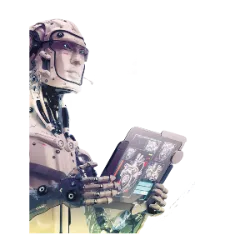
Overfitting explained:
Models can memorize data instead of learning general patterns.
Example: a model trained only on one year’s data fails to predict trends in another year.
Bad data produces bad AI:
Biased data leads to biased decisions.
Example: hiring algorithms based on discriminatory historical data.
Practical examples:
Hybrid and data-driven AI: recommendations and searches.
Example: Google Search, Netflix, Amazon.
Limits of machine learning:
Narrow AI performs only specific tasks and does not understand cultural context or irony.
Example: automatic translators misinterpret idiomatic expressions.
Why AI doesn’t learn like humans:
It learns statistical patterns, not meaning or context.
Example: automatic translators understand words, but not complex idiomatic expressions.
Artificial Intelligence That Already Exists
Narrow AI:
Solves specific and limited tasks.
Example: movie recommendations, facial recognition.
Reactive AI:
Responds only to current stimuli, without memory.
Example: playing chess against a computer.
AI with limited memory:
Learns from recent experiences for future decisions.
Example: self-driving cars adjusting routes based on traffic.
Rule-based AI:
Follows programmed logic and rules.
Example: older expert systems used in medical diagnosis.
Data-driven AI:
Learns statistical patterns from large volumes of information.
Example: recommendation systems, medical diagnostics.
Hybrid AI:
Combines data learning with logical rules.
Example: advanced virtual assistants like Siri or Alexa.
Real examples:
Siri: narrow AI + limited memory.
AlphaGo: narrow AI + reinforcement learning.
Advanced AI
General AI (AGI):
Capable of performing any human cognitive task.
Currently only theoretical; it does not yet exist.
Superintelligent AI (ASI):
Hypothetical intelligence superior to humans in all aspects.
Does not exist, but is discussed in research about the future of AI.
Symbolic AI vs Statistical AI:
Symbolic: uses explicit logic and formal rules.
Statistical: makes predictions based on probabilities and data patterns.
Limits and possibilities:
Existing types already impact our daily lives in recommendations, diagnostics, and automation.
Theoretical types like AGI and ASI could completely revolutionize human-machine interaction in the future.
Summary:
Narrow, reactive, limited-memory, and hybrid AI already exist.
AGI and ASI are still theoretical concepts studied for future applications.
Virtual Assistants and Tools

Virtual Assistants:
Example: Alexa, Siri
Type of AI: hybrid with limited memory
Function: respond to commands, provide information, and remember recent preferences.
Navigation and GPS:
Example: Google Maps
Type of AI: limited memory
Function: optimize routes and predict traffic based on real-time data.
Auto Text Correction:
Example: Gmail, Word
Type of AI: data-driven
Function: suggest corrections and improve writing automatically.
Automatic Translation:
Example: Google Translate
Type of AI: data-driven
Function: convert languages quickly and accurately.
Facial Recognition:
Example: smartphone unlocking
Type of AI: narrow + data-driven
Function: identify people and authenticate devices.
HOME