 ≡
≡
quiz
Flags of BrazilProve your knowledge in the Arena
Do you know what each symbol really means?
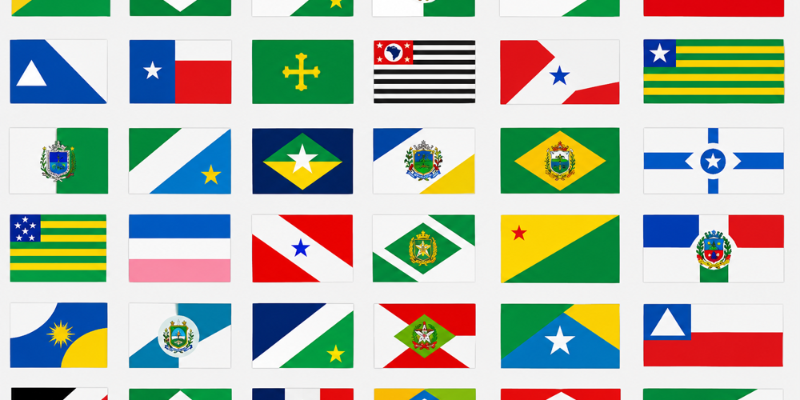
Minas Gerais, Bahia, São Paulo… you’ve seen these flags before, but do you know their stories? It’s not enough to recognize the colors: each one carries revolutions and identities of Brazil. Explore the symbols of the state flags.
Why test your knowledge?
Testing your knowledge improves memory, quick thinking, and the ability to make associations, as well as being a fun way to learn while competing with other people.
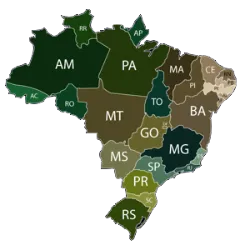
Minas Gerais
Origin: Inconfidência Mineira (18th century)
Symbols:
Red triangle → ideals of freedom and revolution.
Motto: “Libertas Quae Sera Tamen”.
→ “Freedom, even if it comes late”.
Meaning:
Struggle for independence.
Influence of Enlightenment ideas.
Symbol of resistance and freedom.
Pará
Highlight: star on the Brazilian flag also represents the state.
Symbol:
Blue star → Spica star (Virgo constellation).
Meaning:
Represents the state on the national flag.
Connection with astronomy and Brazilian identity.
Integration of Pará into the national symbol.
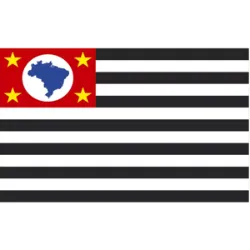
A flag of São Paulo stands out because it closely resembles the flag of the United States — and that is not a coincidence.
Inspiration
Created in the context of the republican movement in Brazil (late 19th century).
Inspired by the style of the U.S. flag.
Idea of representing a new political identity after the Empire.
Similar elements:
Horizontal stripes → resemble the American flag.
Canton (upper corner) → highlighted area as a symbol of authority.
Use of sober colors (black, white, and red).
Meaning
Represents the people of São Paulo and their role in shaping modern Brazil.
Symbolizes the republican and progressive ideals of the time.
Shows international influence in the creation of Brazilian symbols.
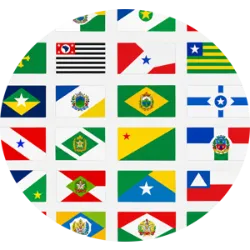












Discover some interesting facts about Flags of Brazil
Rio Grande do Sul was born from a war
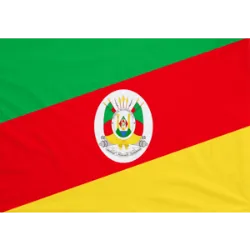
The flag of Rio Grande do Sul originates from one of the most important conflicts in Brazilian history: the Farroupilha Revolution (1835–1845).
What was the Farroupilha Revolution?
Armed movement that took place in southern Brazil.
Led by ranchers and military leaders from Rio Grande do Sul.
It had a republican and separatist character.
The rebels even proclaimed the Riograndense Republic.
The flag:
It emerged during the conflict itself.
It represented the ideals of the Farroupilha rebels.
Colors and symbols linked to regional identity and political struggle.
It later became the official symbol of the state after the end of the war.
Meaning:
Resistance against the Brazilian imperial government at the time.
A pursuit of greater political and economic autonomy.
Today it represents the pride and identity of the people of Rio Grande do Sul.
Pernambuco and the Revolution
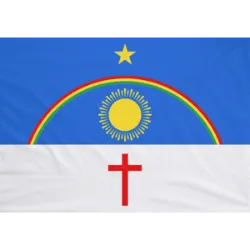
The flag of Pernambuco is directly linked to an important historical movement: the Pernambuco Revolution of 1817.
What was the Pernambuco Revolution?
Independence movement that took place in northeastern Brazil.
Inspired by ideals of freedom and republicanism.
It attempted to break away from Portuguese rule.
It was one of the first republican revolts in the country.
Flag symbols:
☀️ Sun → represents the birth of a new era and hope.
🌈 Rainbow → symbolizes unity, peace, and diversity.
✝️ Cross → historical and religious connection of society at the time.
Meaning:
Represents the struggle for freedom and independence.
Honors the revolutionaries of 1817.
Expresses pride in Pernambuco’s identity.
Symbolizes resistance and republican ideals.
Bahia and revolutionary influences
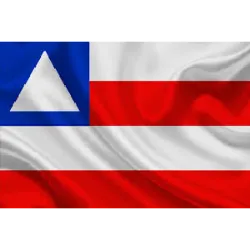
The flag of Bahia carries strong historical influences linked to republican and Masonic ideas, reflecting the spirit of political change during the colonial and imperial periods.
Historical influences:
Inspired by republican ideals of the 18th and 19th centuries.
Connected to independence movements in Brazil.
Influence of secret societies such as Freemasonry.
Symbolic elements:
🔺 Triangle → associated with Freemasonry and the ideal of freedom.
🔴⚪ Red and white colors → represent struggle and peace.
🏳️ Style inspired by revolutionary flags of the time.
Meaning:
Represents the pursuit of political freedom.
Symbolizes resistance against colonial rule.
Reflects the revolutionary spirit of Bahia.
Expresses the historical and cultural identity of the state.
Rio de Janeiro and the royal coat of arms
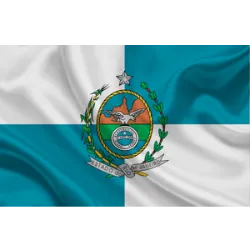
The flag of Rio de Janeiro features historical elements that refer to the Brazilian monarchy and the period in which the state was formed.
Historical context:
Inspired by the period of the Empire of Brazil.
Linked to the history of the Portuguese royal court in the country.
Reflects the importance of Rio as a political and administrative center.
Main symbols:
👑 Coat of arms elements → reference to the monarchy.
🛡️ Shield → representation of protection and authority.
🌿 Natural elements → connected to local identity.
Meaning:
Represents the historical origin of the state.
Connects Rio de Janeiro to the formation of Imperial Brazil.
Symbolizes power, tradition, and historical continuity.
Highlights the political importance of the state in the past.
HOME